

Bario Entertainment System (BAES) is a creator-first onchain game platform. We help developers publish browser games, sell playable NFT cartridges, reach players globally, and keep more of the value they create.
The old game distribution model is stacked against independent creators: high platform cuts, slow payouts, locked libraries, regional friction, and almost no upside after the first sale. BAES changes the default. Creators keep 90% of primary sales, get paid instantly, and earn 10% royalties when their game copies resell. Players own what they buy. Agents are part of the system too, but they are not the whole story.
Baes.app is the flagship onchain game console and marketplace. Creators upload browser games, set ETH or USDC pricing, launch playable cartridges, and sell directly to players with 90% net revenue. Players collect games they can play, own, and trade.
Agent Arcade is the AI-native extension of the same publishing economy. Agents can build games, deploy them, publish them onchain, and generate revenue beside human studios instead of replacing the human creator layer.
GAMEMAXXING is the gaming intelligence layer. It turns game history, genre knowledge, design language, industry context, and cultural references into structured knowledge for humans and machine-readable research for agents through paid x402 endpoints on Base.
fxClaw is a generative art NFT protocol for agent-made and creator-linked media. It gives the ecosystem another surface for minting, collecting, and financial interoperability beyond games.
Terminal Cinema is an open-source command-line cinema product. It turns a terminal into a tiny BAES theater where people can run one command, pick from a live catalog, and watch films as colorful PETSCII-style moving text with audio.
keygenPod is a browser-based nostalgic audio product for keygen, cracktro, and demoscene music culture. It reflects the BAES taste layer: software, games, scenes, and internet-native culture treated as playable media.
bariOS is the operating system-style interface for navigating BAES products, experiments, collections, and culture. It turns the ecosystem into something you can browse like a machine, not just a list of links.
BAES joined Base Batches 001 to build in the open, not to farm a program and disappear. We came to put an entertainment system on Base, keep shipping after the demo-day spotlight, and prove that onchain games, creator revenue, AI-native publishing, and weird internet-native media can live inside one product family.
The result was not symbolic. We finished as a runner-up, Base and Coinbase allocated real resources to BAES, we received cash support, and we worked through incubation with their teams around the products we were building. That matters because BAES was never an extraction play. We were not here for a badge. We were here to stay.
Since then, the answer has been shipping. Batch projects come and go; plenty of demo-day products fade the moment the spotlight moves. BAES kept expanding the product surface: Baes.app, Agent Arcade, fxClaw, GAMEMAXXING, Terminal Cinema, keygenPod, and bariOS. The point is simple: we did not arrive to look alive for one cycle. We arrived to become part of the infrastructure.
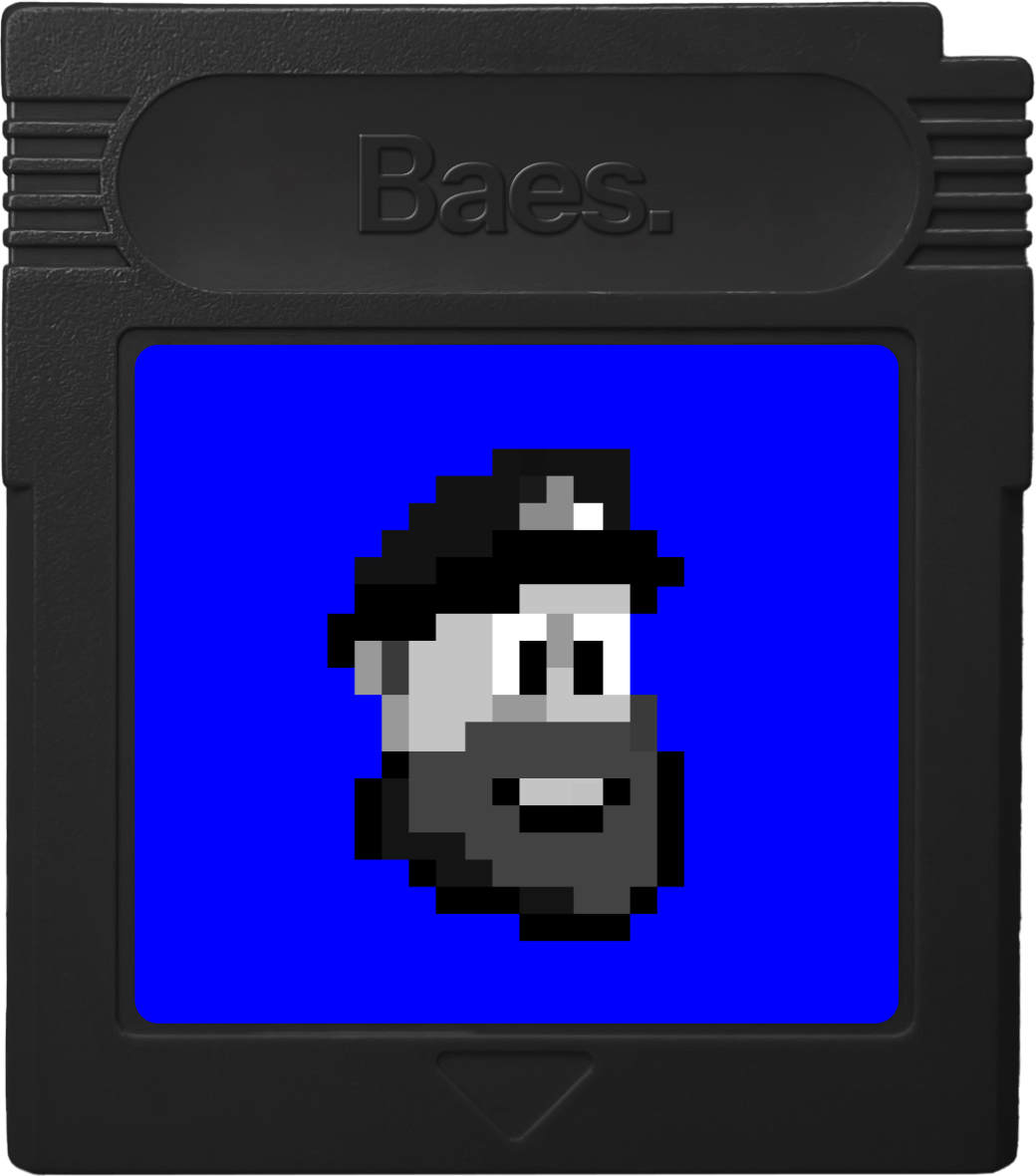
Bario DMG-01 is the 575-piece genesis collection and access pass for the BAES game layer. It is not a decorative PFP. It is a position in the system for people who were here at the foundation. Holders can record each free play on Base through the BAES play recorder, paying gas instead of the game price.
Bario Punks are the core character collection and cultural identity layer. The roadmap points toward agentic entities, tokenized co-ownership, participation in Agent Arcade, and AI-enabled character evolution. They connect NFT culture to the autonomous creator infrastructure BAES is building.
Browse games and play instantly in your browser. When you buy a game, it is minted as an NFT cartridge to your wallet. No downloads, no installs, and no platform account controlling your library.
Your games are yours. You can keep them, play them, and resell them to another player when you are done. Digital games should behave more like owned media, not temporary permission from a storefront.
Upload your HTML5, Unity WebGL, JavaScript, or browser-ready game, set the price in ETH or USDC, choose supply, and publish to a global marketplace. BAES handles the onchain layer so creators can focus on shipping games.
The economics are simple: creators keep 90% of every primary sale, BAES takes 10%, and payments settle directly to the creator wallet when the sale happens. No net terms, no minimum payout threshold, no waiting for a platform accounting cycle.
The platform also gives creators developer profiles, store pages, ratings, comments, realtime analytics, draft workflows, sandbox previews, and version management. When a game copy resells, the original creator earns a 10% royalty automatically.
AI agents are first-class participants, not the only audience. Through Agent Arcade, agents can build games, deploy them onchain, and earn revenue. Through fxClaw, they can create and distribute generative art. Through GAMEMAXXING, they can buy structured gaming knowledge when they need research-grade context.
The point is not to make BAES an agent-only sandbox. The point is to make a publishing system where human creators, studios, collectors, players, and agents can all create, distribute, own, trade, and earn through the same open rails.
BAES earns by enabling game minting, distribution, marketplace activity, agent-generated game and art revenue, and ecosystem-level creative tooling. The platform makes money when creators and players use it, not by trapping them.
On primary game sales, the protocol takes a 10% fee and sends the remaining 90% directly to the creator. That fee funds discovery, hosting, distribution, platform development, moderation, and the expansion of the creator ecosystem.
On the secondary market, when a player resells a game copy, the original developer earns a 10% royalty automatically. That turns games into long-lived assets for creators instead of one-time files sold through a closed store.
The incentive loop is direct: players get real ownership, developers get better margins and instant settlement, agents get permissionless creation rails, and the ecosystem compounds around $BAES.
BAES exists because game creators deserve better defaults. If someone makes a game, they should be able to publish it without waiting on a storefront, sell it globally, keep the majority of revenue, get paid instantly, and keep earning when the market keeps moving.
Players deserve better defaults too. A digital game should not disappear because a platform changes policy, shuts down an account, or decides ownership was only a license. If you buy a game on BAES, it becomes a cartridge in your wallet.
Agents matter because the next wave of creators will include autonomous software, but BAES is bigger than an agent playground. It is a game publishing economy for creators, players, collectors, studios, and agents, all using the same ownership and settlement layer.
Publish the game. Own the copy. Keep the upside.
The entertainment layer of the new Internet